
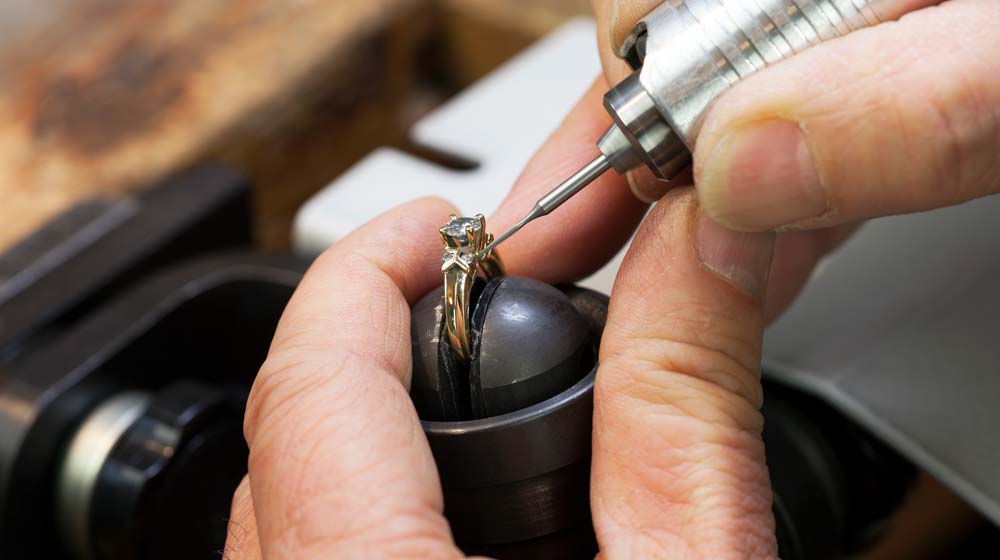
A lot of repair jobs start with something small. A ring catches on a sweater. A clasp pops open when it should not. A diamond shifts just enough that you can feel it move with your fingernail. Most people keep wearing the piece and hope it can wait. That is usually when a simple repair turns into a lost stone, a snapped chain, or a ring that needs more work than it would have a month earlier.
If a ring suddenly spins, a clasp starts slipping open, or a stone feels loose when it never did before, bring it in before it turns into a bigger repair. If you are looking for Jewelry Repair in Madison WI, these are the warning signs to watch for.
Signs You Need a Jewelry Repair Service in Madison
You should have your jewelry checked if you notice any of the following:
- A stone moves, clicks, or looks off center in the setting
- Prongs catch on clothing or look worn down
- A ring spins more than it used to or no longer fits right
- A clasp opens too easily or a chain kinks in the same spot
- The bottom of a ring band looks thin or flattened
- Pearls have gaps between them or the strand hangs differently
- Jewelry still looks cloudy or dull after cleaning
- An heirloom piece has a loose stone, bent area, weak clasp, or worn pin back
These are some of the most common signs that it is time to bring a piece to a professional Jewelry Repair Service in Madison.
1. A Stone Moves, Clicks, or Looks Off in the Setting
If a diamond or gemstone moves in the setting, stop wearing the piece until it can be checked. That is one of the clearest signs the setting is no longer doing its job.
Sometimes the problem is obvious. You tap the ring lightly and hear a click. You run a fingernail along the edge of the stone and feel movement. Other times, the stone just looks slightly crooked, sits lower than it used to, or catches light differently because it has shifted in the mounting.
We see this most often in engagement rings, anniversary bands, and gemstone rings that are worn every day. A prong may have worn down, the head of the ring may have taken a hit against a countertop, or the setting may simply have loosened over time. A quick tightening might solve it, but once a stone starts moving, it is not worth guessing.
If you need a jeweler to inspect a loose stone, worn setting, or damaged ring, Lee Dorn offers Jewelry Repair and Restoration in Madison for rings, necklaces, bracelets, earrings, and heirloom pieces.
2. Your Prongs Catch on Sweaters or Feel Rough
Prongs may be small, but once one starts wearing down, the stone is no longer as secure as it looks.
A prong should sit tight against the stone. It should not look flattened at the tip, sit higher than the others, or feel rough when you run a finger over it. One of the most common warning signs is snagging. If your ring catches on sweaters, towels, bedding, or knit gloves, a prong may be lifted or worn thin.
This is especially common with rings worn every day. Handwashing, gardening, lifting boxes, sleeping in a ring, or bumping it against hard surfaces all add up over time. A ring does not need a dramatic accident to develop a prong problem.
Lee Dorn also explains why regular jewelry inspections are recommended, especially for rings that are worn daily.
3. Your Ring Suddenly Spins, Slides, or Feels Too Tight
When a ring stops fitting the way it used to, sizing is not always the whole story.
Sometimes fingers change with the season, temperature, or age. But we also see rings that start spinning because the shank has worn thin at the bottom, the head has become top heavy, or the band has gone slightly out of round. Larger center stone rings and older mountings tend to show this more often because they put more weight at the top of the ring.
A ring that slides off too easily is easy to lose. A ring that is too tight can be uncomfortable to wear and hard to remove safely. If you have a ring that no longer feels right, have it checked before assuming it only needs a resize. A jeweler should also look at the band, the setting, and the areas where wear tends to show up first.
4. The Clasp Still Works, But You Do Not Trust It
A necklace or bracelet does not have to be fully broken to need repair. If the clasp closes but you keep checking it all day, that is already a sign something is wrong.
Sometimes a spring ring no longer snaps shut cleanly. Sometimes a lobster clasp feels sticky or weak. Sometimes the jump ring next to the clasp has started pulling open. We also see chains and bracelets that kink in the same spot over and over, which usually means that section has started to weaken.
That matters because clasps and jump rings are often the first parts to fail. It is much better to replace a worn clasp or repair a weak link than to lose a pendant or bracelet because the piece gave out while you were wearing it.
5. The Bottom of the Ring Band Looks Thin or Flat
One of the most common repairs on older rings is wear at the bottom of the band, the part that rests against your palm. This area rubs against steering wheels, shopping carts, pockets, countertops, weights at the gym, and everything else your hands touch during the day.
Over time, the metal can wear down much more than most people expect. The band may start to look flatter, thinner, or sharper at the edges. In some cases, it may even feel lighter than it used to.
That kind of wear should not be ignored. A thin shank can eventually crack or split, especially on rings that are worn every day or have been resized in the past. Catching it early usually gives you more repair options and can help you avoid a much bigger problem later.
6. The Piece Looks Bent, Leaning, or Out of Shape
Jewelry does not have to break in half to be damaged. Sometimes the first sign is simply that it no longer sits the way it should.
The head of a ring may lean slightly to one side. An earring post may tilt. A bracelet link may look twisted. A pendant bail may start opening where it connects to the chain. These are the kinds of problems we often see after a piece is dropped, caught on clothing, or hit against a hard surface.
Even if the jewelry still feels wearable, a bent setting or misshapen band can put extra stress on stones, solder joints, and links. What looks like a small cosmetic issue can turn into a structural one if it is left alone.
7. Your Pearl Strand Has Gaps Between the Pearls
Pearls need a different kind of maintenance than most other jewelry. If you wear a pearl strand regularly, the silk or thread will eventually stretch.
A pearl necklace usually needs restringing if you can see extra space between the pearls, if the strand hangs longer than it used to, or if the thread near the clasp looks frayed. Pearls can also rub against each other when the strand gets too loose, which is one reason it is better to restring them before the necklace breaks.
Once a strand snaps, pearls can hit the floor, chip, scratch, or disappear under furniture. Restringing before that happens is always the better option.
8. It Still Looks Dirty or Dull After You Clean It
If jewelry still looks cloudy after cleaning, the problem may not just be surface dirt.
Soap residue, lotion, hairspray, and everyday grime can build up under stones, around prongs, and inside chain links. A ring may look dull because the underside of the center stone is coated. Earrings may look lifeless because residue has collected around the setting. Dirt packed around prongs can also make it harder to see that the metal itself has started wearing down.
If a piece still looks off after careful home cleaning, or if it has not been professionally cleaned and inspected in a long time, it is worth bringing it in. Lee Dorn also shares tips on jewelry cleaning and how to care for fine jewelry between visits.
9. An Heirloom Piece Has a Small Problem You Keep Putting Off
This is where small issues matter most. A loose stone in a newer ring is one thing. A loose stone in your grandmother’s ring, an antique brooch, or a family bracelet is something else entirely.
Older pieces often have delicate filigree, worn solder joints, handmade settings, pin stems that are not as strong as they once were, or details that should not be over polished. That is why heirloom jewelry should not be treated the same way as a brand new piece that only needs a quick repair.
If an heirloom ring has a bent prong, a vintage necklace has a weak clasp, or an antique pin no longer closes properly, bring it in before the damage spreads. Lee Dorn has also written about antique jewelry repair and restoration for pieces that need careful, preservation minded work.
Why Professional Jewelry Repair Matters
A good repair does more than fix the problem you can already see. It also catches the worn prong, weak clasp, thinning band, or damaged setting that is about to become the next problem.
That is one reason professional inspection matters. A jeweler can tell whether a loose stone only needs tightening or whether the prongs are too worn to trust. They can spot a band that is thinning at the bottom, a bent head that is putting pressure on the setting, or a clasp that looks fine from the outside but is close to failing.
Different pieces also need different repair approaches. A platinum engagement ring, a strand of pearls, an antique brooch, and a silver chain should not all be handled the same way. The piece should come back secure, wearable, and still look like the piece you brought in.
What to Expect From a Jewelry Repair Appointment in Madison
If you bring a piece in for Jewelry Repair in Madison WI, the first step is usually a close inspection of the areas most likely to fail. That often includes the prongs, center setting, clasp, bottom of the ring shank, chain links, earring posts, and soldered areas.
From there, the jeweler can explain what is wrong, what should be repaired now, and whether there are any other weak spots worth addressing at the same time. In some cases the fix is simple, like tightening a stone or replacing a clasp. In others, the better option may be rebuilding worn prongs, repairing a cracked shank, or restoring an older setting before more damage occurs.
For Madison customers, that matters because many repairs are preventable when the warning signs are caught early.
When to Bring Jewelry in for Inspection
You do not need to wait until a piece breaks.
Bring jewelry in if:
- you notice movement in a stone
- the ring catches on clothing
- the clasp no longer feels reliable
- the band has gone thin at the bottom
- the piece was recently dropped or hit hard
- the ring no longer fits the way it should
- an heirloom piece has not been inspected in years
If you wear a ring every day, especially an engagement ring or wedding set, regular inspections are worth it. Catching a worn prong or weak shank early is much easier than replacing a lost diamond later.
Trusted Jewelry Repair Service in Madison
When jewelry starts feeling loose, worn, or unreliable, the safest move is to have it looked at before something is lost or broken. Lee Dorn Jewelers offers Jewelry Repair and Restoration in Madison for everyday repairs, stone tightening, restoration work, and sentimental pieces that need extra care.
If you have a ring that no longer fits, a necklace clasp you do not trust, or a family piece that has been sitting in a drawer because it needs work, now is a good time to bring it in. You can also read Lee Dorn’s professional jewelry repair and restoration tips or contact Lee Dorn Jewelers to schedule an inspection.
For general guidance on caring for fine jewelry between professional visits, the Gemological Institute of America offers practical jewelry care advice.
Frequently Asked Questions
1. How do I know if my ring needs professional repair?
If a stone moves, the prongs catch on fabric, the band looks thin, or the ring no longer fits the way it used to, it should be inspected. Even if the ring still looks fine from a distance, those are common signs that something is wearing down.
2. Can a loose diamond be fixed before it falls out?
Yes, in many cases it can. A jeweler may be able to tighten the setting, retip worn prongs, or repair the head of the ring before the stone is lost. The key is bringing it in as soon as you notice movement.
3. How often should I have my jewelry inspected?
For rings worn every day, especially engagement rings and wedding sets, once or twice a year is a smart baseline. If the ring takes a hard hit, catches on clothing, or suddenly feels different, have it checked sooner.
4. Is it okay to keep wearing a ring if one prong looks bent?
It is better not to. A bent prong can mean the stone is no longer secure, even if it has not shifted yet. Continuing to wear the ring increases the risk of losing the stone.
5. What are the signs that a necklace clasp needs repair?
If the clasp opens too easily, sticks, does not close cleanly, or makes you feel like you need to keep checking it throughout the day, it is worth having repaired. The jump ring next to the clasp should also be checked.
6. Can a worn ring band be repaired?
Yes. If the bottom of the band has worn thin, a jeweler can inspect it and recommend the right repair. Depending on the condition, that may involve reinforcing, rebuilding, or replacing part of the shank.
7. When should pearls be restrung?
Pearls should be restrung when you see gaps between them, the strand hangs longer than it used to, or the thread near the clasp looks worn. It is best to do it before the strand breaks.
8. Why does my jewelry still look dull after I clean it at home?
Buildup often collects underneath stones and around prongs where a regular at home cleaning cannot fully reach. Dullness can also hide wear in the setting, which is why professional cleaning and inspection are helpful.
9. Can antique or heirloom jewelry be repaired safely?
Yes, but it should be handled carefully. Older jewelry often has delicate details, older settings, or worn structural areas that need a more careful restoration approach than a standard repair.
10. Is it worth repairing older jewelry instead of replacing it?
In many cases, yes. Older pieces often have sentimental value, family history, or design details that cannot be replaced. A proper repair can make the piece wearable again while preserving what makes it special.
Contact Lee Dorn Jewelers
If your jewelry is showing signs of wear, do not wait for a loose stone, weak clasp, or thin ring band to turn into a bigger problem. Lee Dorn Jewelers provides a trusted Jewelry Repair Service in Madison for rings, necklaces, bracelets, earrings, pearls, and heirloom pieces.
Bring your jewelry in for an inspection, or contact Lee Dorn Jewelers to ask about repair options. A small repair done at the right time can save a favorite piece before the damage becomes harder to fix.